Table of Contents
wordpress development services is the planning, design, development, integration, testing, launch and ongoing improvement of a WordPress website by a specialist team. A good implementation is fast, editable, secure, indexable and documented; a bad one hides business logic in page builders, plugins and undocumented fixes. Tell them apart by asking for a code review, performance budget, rollback plan and ownership map before signing.
What Decision Makers Are Actually Buying
You are not buying screens. You are buying a maintainable publishing system with predictable total cost. A serious vendor defines content types, editor workflows, conversion paths, integrations, hosting limits, analytics, accessibility targets, security controls and release rules. The proposal should name what is custom, what is configured, what is licensed and what remains your property after handover.
For most B2B and content-heavy sites in 2026, the build has five layers: information architecture, theme or block system, data model, third-party services, and operations. Weak vendors quote only the visible layer. They show a mockup, list plugins and call the rest “setup”. Strong vendors price discovery, content migration, QA, Core Web Vitals work, training and post-launch support as separate deliverables.
Ask for the repository structure, staging URL policy, plugin decision log and acceptance criteria. If the vendor cannot explain how a new landing page is created without developer help, the site will create a recurring invoice every time marketing needs a campaign page. If they cannot explain how schema, redirects and canonical rules are tested, organic traffic becomes the launch risk.
Budget conversations also need a shared baseline. Before comparing proposals, read WordPress Pricing: Vendor Costs, Scopes and Risk in 2026 so line items such as discovery, migration, QA and support are not mistaken for optional extras. A low fixed fee usually means those tasks were removed, not made efficient.
Vendor Options and What the Money Buys
Use a range table to shortlist, then validate with a technical interview. The numbers below are typical 2026 commercial ranges for a business site with 20–80 pages, 1–3 integrations and no complex commerce. They exclude premium licensing, hosting, paid media and content production unless stated.
| Option | Typical 2026 range | Best fit | What is usually included | Main risk |
|---|---|---|---|---|
| Freelancer with a premium theme | $3,000–$8,000 | Small brochure site, low change rate | Theme setup, page building, basic forms, 1 round of QA | Single-person dependency, limited documentation, plugin-heavy edits |
| General web agency | $8,000–$20,000 | Design-led marketing site | UX, UI, WordPress configuration, copy placement, launch support | Custom code may sit outside WordPress standards |
| Specialist WordPress agency | $18,000–$45,000 | Content platform, integrations, SEO equity | Discovery, custom blocks or theme, data model, migration, performance budget, security hardening, training | Higher upfront fee; scope discipline is required |
| Enterprise WordPress partner | $45,000–$120,000+ | Multisite, multilingual, compliance, high traffic | Architecture, CI/CD, load testing, SSO, governance, SLA, staged rollout | Procurement time and internal stakeholder load |
Compare the rows against your operating model, not against the cheapest quote. A site with 12 editors, 4 languages and a CRM needs governance. A 12-page site with one editor does not. For a build that must carry search equity, Custom WordPress Development (End-to-end website development with tailored themes, SEO-ready architecture and security hardening) is the cleanest fit: Custom WordPress Development. It keeps the theme, content model and launch controls in one accountable scope.
Also separate build cost from change cost. Ask each vendor to price three future tasks: add a new content type, replace a form provider, and ship a campaign landing page in under 48 hours. The answers reveal coupling. A $12,000 site that needs $1,800 per small change is more expensive over 24 months than a $28,000 site with reusable blocks.
Technical Due Diligence Before You Sign
Get a Quote
Email + requirement + budget range — we reply with a quote within 24 hours.
Architecture and editing
Request a content model diagram. It should list post types, custom fields, taxonomies, relationships and reusable block patterns. For a service business, “Services”, “Case studies”, “Team” and “Locations” should not be pages with hand-coded layouts. They should be structured content with predictable templates. This is what makes internal linking, schema and redesigns affordable.
Ask who owns the editor experience. In 2026, a block-first build is usually right for marketing teams, but not every section should be freely editable. Good vendors lock brand-critical regions, expose approved patterns and give editors a short pattern library. Ask to watch a non-technical person create a page in staging. Do not accept a slide deck instead.
Performance and SEO controls
Set measurable acceptance targets: LCP under 2.5 seconds on a defined mobile test, CLS under 0.1, INP under 200 ms, no render-blocking legacy bundles, and image delivery through modern formats. Require the test device, network throttle, cache state and pages tested. “Optimized for speed” is not a deliverable.
SEO due diligence is equally concrete. Require a redirect map, canonical rules, XML sitemap logic, title and meta templates, structured data validation, and a crawl comparison before and after launch. If the project includes a redesign, ask how template changes preserve heading hierarchy and internal links. Our How to Optimize WordPress Performance: Vendor Guide 2026 gives a useful benchmark list for the performance part of that review.
Security, updates and handover
Require least-privilege roles, MFA for admin accounts, disabled file editing, documented backup and restore tests, a plugin inventory with update owners, and a WAF or equivalent edge policy. Ask how a vulnerable plugin is handled at 09:00 on a Monday. The answer should include staging, patch, regression tests and rollback, not “we update everything automatically”.
Handover is a deliverable. You should receive repository access, a local setup guide, environment variables, database export, licensed asset list, API credentials ownership, release notes and a 30–60 minute recorded training session. Documentation quality is often the earliest signal of code quality. If your team needs a standard to specify, use Choosing a Vendor for WordPress Developer Documentation as the acceptance reference.
How to Evaluate Proposals Step by Step
- Write a one-page brief with business goal, page count, content types, integrations, languages, traffic range, compliance needs, launch date and three future changes. Send the same brief to 3–5 vendors. Do not let each vendor redefine scope.
- Normalize quotes into a single sheet: discovery, UX, design, front end, back end, migration, QA, SEO preservation, performance, security, training, warranty, support and licensing. Mark anything absent as “excluded”, not “free”.
- Run a 45-minute technical review. Ask for a sample repository, a plugin rejection example, a redirect map sample, a staging-to-production checklist and the exact person who will write the code. Record decisions in the sheet.
- Score evidence, not claims. Use 5 criteria with 20 points each: architecture fit, editor usability, measurable performance, launch risk control and handover completeness. Reject any proposal scoring under 70 or missing rollback.
- Pilot one thin slice before full commitment: one content type, one template, one form integration and one performance report. A 5–10 day paid pilot exposes communication speed and code habits faster than another discovery call.
- Sign with acceptance tests, a change-order rate card, warranty terms, response times and a named escalation contact. Tie the final 15–25% payment to staging acceptance, not to the day the site becomes live.
Red Flags in Contracts and Delivery
Price is only one risk signal. Contract language tells you how the vendor behaves when scope gets hard. Look for fixed deliverables, defined environments, named roles, testable criteria and explicit ownership. Avoid vague phrases such as “industry best practices”, “unlimited revisions” and “standard optimization”. They create arguments, not outcomes.
- Plugin count used as architecture. Twenty-plus plugins with overlapping form, SEO, cache and builder features raise conflict and update risk. Avoid it by requiring a plugin decision log with purpose, maintainer, last update, licence and replacement plan.
- No migration inventory. URLs, redirects, media, metadata and author fields get lost at launch, causing traffic drops. Avoid it by requiring a crawled URL export, 1:1 redirect map, staging crawl diff and a 14-day post-launch log review.
- Design approved before content model. Teams build beautiful templates that editors cannot reuse, then paste layouts into pages. Avoid it by approving content types, fields and patterns before visual design sign-off.
- “Free” post-launch support. Unpriced support becomes slow support or a dispute over what counts as a bug. Avoid it with a 30-day warranty, severity definitions, response windows and an hourly rate for enhancements.
- No rollback rehearsal. A backup that has never been restored is an assumption. Avoid it by making one timed restore on staging part of launch acceptance, with a target under 60 minutes.
Migration-heavy projects need extra scrutiny. If the vendor is replacing a legacy CMS or moving themes, align the quote with WordPress Migration: Vendor Decisions, Costs and Risk in 2026 and require a freeze window, content owner sign-off and analytics baseline. For classic-to-block conversions, preserve template hierarchy and heading structure with the checks in Migrating a Classic Theme to a Block Theme Without Losing SEO. These are separate workstreams, not “content upload”.
What a Good 2026 Delivery Timeline Looks Like
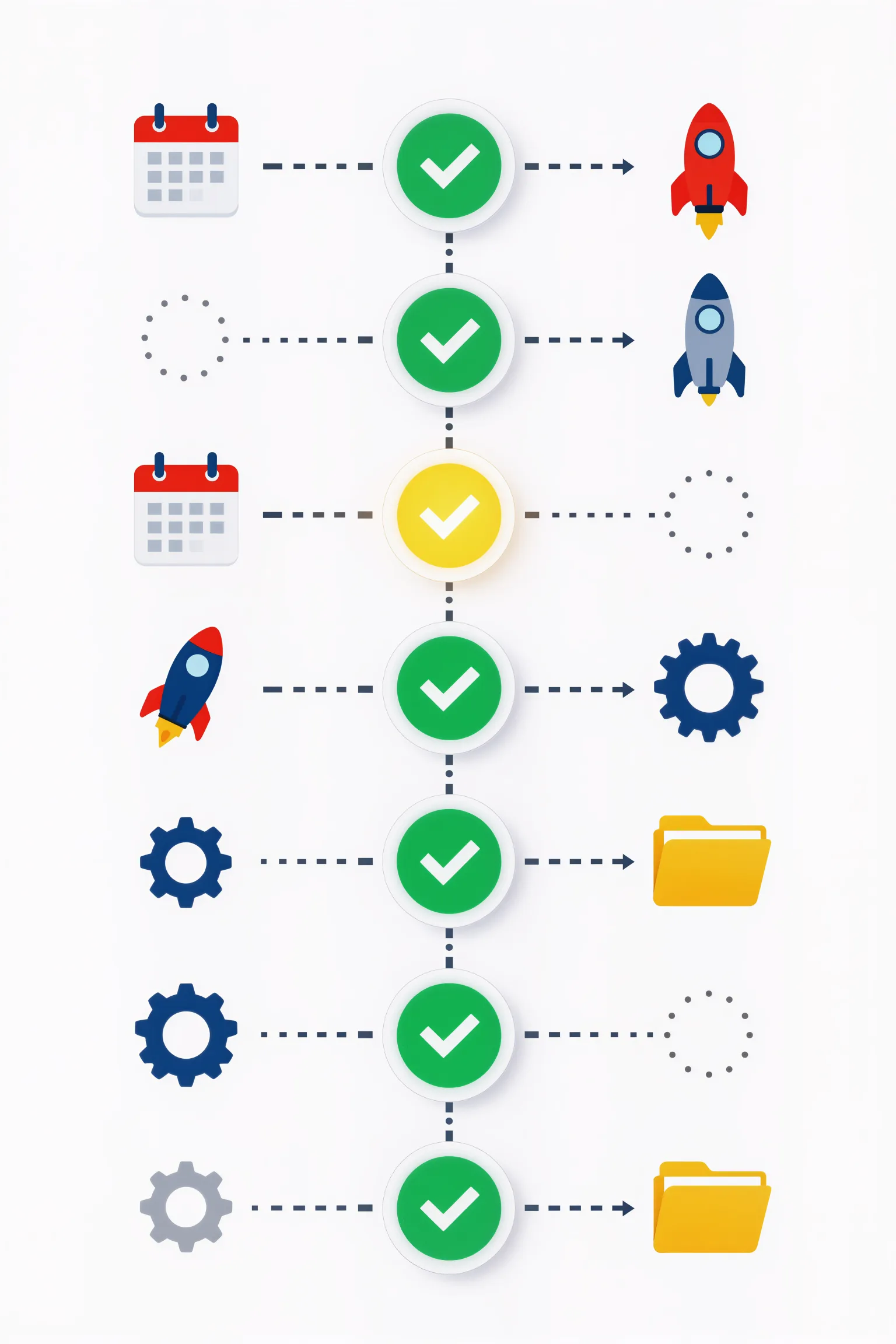
A reliable schedule is front-loaded. For a $18,000–$45,000 specialist build, expect 1–2 weeks for discovery and analytics baseline, 2 weeks for architecture and content model, 2–3 weeks for design system and patterns, 4–6 weeks for development and integrations, 1–2 weeks for migration and QA, then 3–5 business days for launch and monitoring. Total: 10–15 weeks. Anything promising a custom platform in 3 weeks is skipping evidence.
Each phase should end with an artifact you can inspect. Discovery ends with a requirements matrix and measurement plan. Architecture ends with a content model and template list. Design ends with patterns, states and accessibility notes. Development ends with a staging build, code review summary and performance report. QA ends with a defect list, redirect test and editor test. Launch ends with monitoring, rollback notes and training.
Set a decision cadence. One weekly 30-minute status call, one shared board, one named approver on your side and a 2-business-day feedback SLA prevent most delays. Vendors should flag scope changes within 48 hours with cost and schedule impact. If changes only appear in the final invoice, governance is missing.
After launch, measure the system for 30 days: Core Web Vitals on 5 key templates, 404 rate, index coverage, form delivery, CRM field accuracy, editor time to publish, plugin update incidents and restore test result. Book a 30-day review before the warranty expires. Then decide on a retainer based on actual ticket volume, not a packaged guess.
FAQ
How much should wordpress development services cost in 2026?
For a 20–80 page business site with 1–3 integrations, expect $18,000–$45,000 from a specialist agency. Theme-based freelancer builds often run $3,000–$8,000. Enterprise multisite or compliance work commonly starts at $45,000.
What should be included in a vendor handover?
Repository access, local setup guide, content model, plugin inventory, environment variables, licence list, redirect map, performance report, backup and restore procedure, release notes and recorded editor training. Ownership should be written into the contract.
How do I compare two proposals with different scopes?
Rebuild both into one line-item sheet, mark missing work as excluded, then score architecture, editor usability, performance targets, launch risk control and handover out of 100. A paid thin-slice pilot is the fastest tie-breaker.
Next Step
Shortlist vendors with the same brief, the same scorecard and the same acceptance tests. If you want one accountable scope for architecture, custom build, SEO preservation, performance and security, review your requirements with our team. Request a scoped proposal and technical consultation with launch date, page count, integrations and current analytics baseline.